

Research
The Klein lab focuses on how sex, age, and pregnancy impact microbial pathogenesis and immune responses to vaccines

Sex differences in microbial pathogenesis
Working with microbes, including influenza A and B viruses, SARS-CoV-2, and hantaviruses, and M. tuberculosis, we have shown that:
We are always prepared to study emerging infectious diseases, with an eye toward understanding sex differences in outcomes, including most recently following H5N1 infection;
females mount greater innate and adaptive immune responses during infection than males;
sex steroid hormones, including estrogens, progesterone, and androgens, are immunomodulatory;
sex differences in the outcomes of viral infection depend on disease etiology; e.g., if disease is caused by an inability to control virus replication then males suffer more and if disease is caused by immunopathology, then females have worse outcomes.

Sex and age differences in vaccine efficacy
Working with vaccines that protect against influenza viruses, SARS-CoV-2, and malaria parasites, we have shown that sex differences in vaccine efficacy are age-dependent and involve both sex steroid hormone concentrations and the expression of X-linked genes.
Females develop stronger antibody responses to vaccines and are better protected following challenge than males;
Sex differences in vaccine-induced immune responses and protection are greatest during reproductive ages, in both mice and humans;
Females have stronger activation of B cells following vaccination, including expression of Tlr7 and Aicda, which is associated with greater class switch recombination and somatic hypermutations in B cells from females than males ;
Elevated concentrations of estradiol in females and testosterone in males is associated with sex-specific differences in antibody response to vaccines in both humans and mice.
Age associated reductions in immunity following influenza and COVID-19 vaccination are greater for males than females among both healthcare workers and older aged adults.
Sex, age, and pregnancy impact immunity to vaccines
We are showing that our reproductive condition has direct effects on the immune responses that we mount following vaccination, including:
Reproductive aged females have greater antibody response to seasonal influenza and COVID-19 vaccines than same age males, among both humans and mice;
Estrogen receptor signaling in B cells changes the metabolic and transcriptional profiles of antibody secreting B cells to increase antibody production;
Pregnancy, which is a time of significant hormonal changes, alters immune responses to vaccines, including against COVID-19, but reducing the breadth of immunity generated following vaccination.
Vaccination during pregnancy, including against RSV, is a critical mechanism for transfer of protective antibodies to infants, which can be affected by the timing of vaccination.
Pathogenesis of virus infections during pregnancy
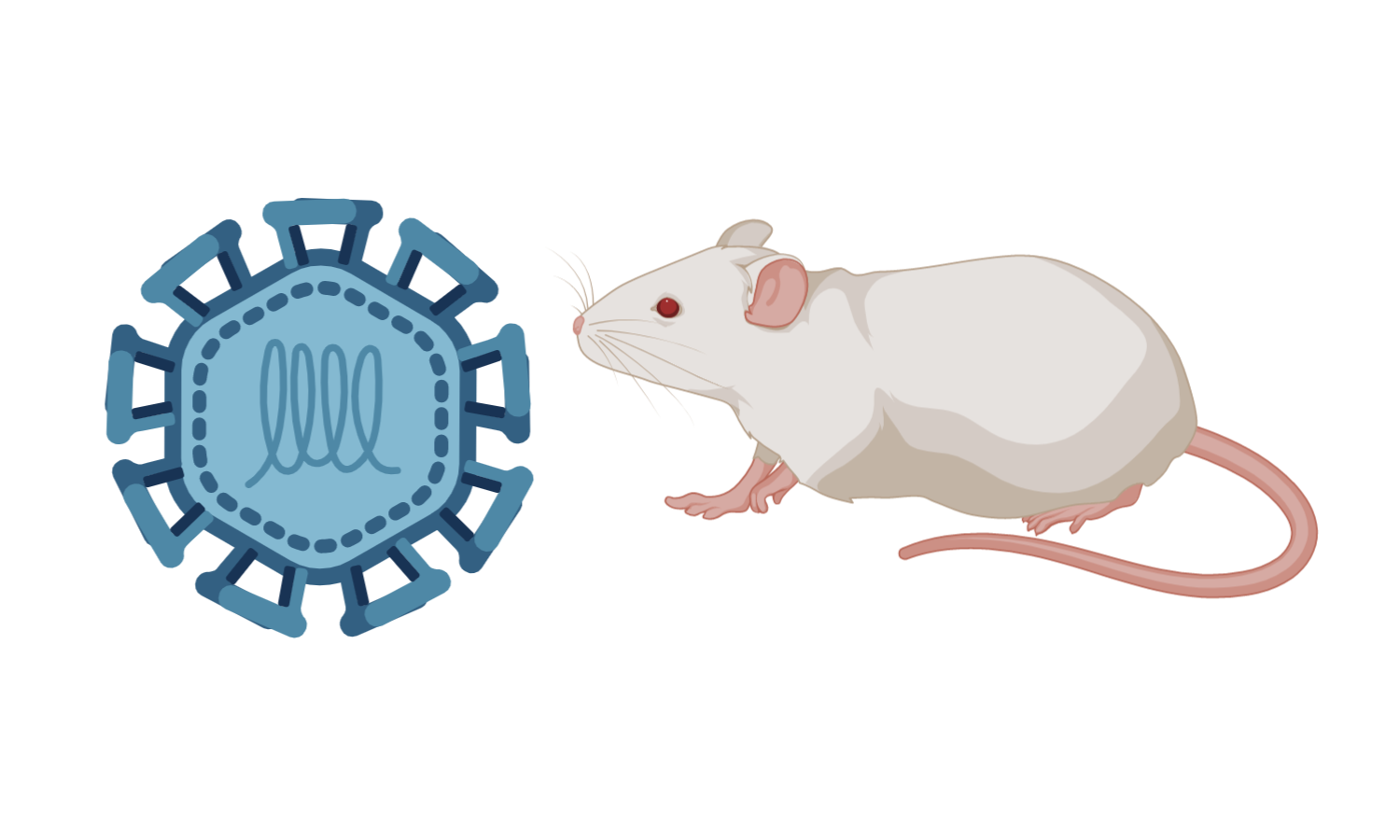
We have developed several animal modes to interrogate the mechanisms of adverse outcomes from viral infections during pregnancy, which has enabled us to uncover:
Even thought seasonal influenza viruses do not replicate outside of the respiratory tract, they cause placental inflammation and adverse pregnancy outcomes;
Zika viruses infect trophoblasts and endothelial cells of the placenta to disrupt the integrity of the placenta structure;
Placental inflammation, particularly IL-1β signaling, rather than direct Zika virus infection causes congenital Zika virus syndrome;
SARS-CoV-2 does not typically infect the placenta or fetus, but causes placental damage, intrauterine growth restrictions, and neurodevelopment deficits that are caused by reduced antiviral defenses and control of virus replication in the respiratory tract of pregnant dams; antiviral treatments reverse the detrimental effects of SARS-CoV-2 on pregnancy outcomes.

The immune response to SARS-CoV-2
We are very active in multiple studies evaluating how sex and age impact immunity to SARS-CoV-2 during the COVID-19 pandemic, in part through our leadership of a an NIH/NCI U54 COVID-19 Serology Center of Excellence.
serve as the serology core for the National Convalescent Plasma Project where we have shown that receipt of convalescent plasma early during COVID-19 reduces hospitalization by more than 50%.
contribute to understanding the quality and durability of vaccine-induced immunity in immunosuppressed people, including solid organ translate recipients;
analyze sex differences in immunity and outcomes of SARS-CoV-2 in older adults;
demonstrate altered immunity to SARS-CoV-2 in pregnant women;
developed a hamster model and mouse model to interrogate sex differences in acute and long-term SARS-CoV-2 outcomes.
using electronic health records from Johns Hopkins, we show that males are more likely than females to be hospitalized with severe COVID, which is associated with elevated concentrations of inflammatory biomarkers early during the course of disease.
Select Publications: (*= trainee research)
Seibert, B.A., Parish, M.A., Talukdar, S.N., Zhang, T., Liu, J.A., Chaulagain, S., Sachithanandham, J., Hernandez, O., Schneider, C., Coughlan, L., Bowman, A.S., Webby, R.J., Harkema, J.R., Pekosz, A., & Klein, S.L. 2026. Trimester-dependent vertical transmission of H5N1 virus through placental and mammary routes impairs offspring development. Nature Communications, in press.*
Chaulagain, S., Liu, J.A., McComb, J., and Klein, S.L. 2026. Sex differences in immune responses to viruses, bacteria, and vaccines. Nature Immunology, 27(4):660-673.*
Dabitao, D., Somboro, A., Sanogo, I., Diarra, B., Achenbach, C.J., Holl, J.L., Baya, B., Sango, M., Wague, M., Coulibaly, N., Kone, M., Drame, H.B., Tolofoudie, M., Kone, B., Diarra, A., Coulibaly, M.D., Saliba-Shaw, K., Toloba, Y., Diakite, M., Doumbia, S., Diallo, S., Murphy, R.L., Bishai, W.R., & Klein, S.L. 2026. Gonadal steroids as predictors of sex differences in tuberculosis outcomes. JCI Insight, 11(15):e200877.*
St Clair, L.A., Watters, E.G., Yin, A., Liu, J.A., Chaulagain, S., Thompson, E.A., & Klein, S.L. 2026. Estradiol enhances influenza vaccine responses through B cell metabolic reprogramming in female mice. mBio, e0396525, DOI: 10.1128/mbio.03965-25. PMC13059741.*
Parish, M.A., Sachithanandham, J., Gutierrez, L., Park, H.-S., Yin, A., Roznik, K., Creisher, P., Lee, J., St Clair, L.A., Bersoff-Matcha, S., Pilgrim-Grayson, C., Berhane, L., Golding, H., Shea, P., Fenstermacher, K., Rothman, R., Burd, I., Sheffield, J., Cox, A.L., Pekosz, A., & Klein, S.L. 2025. Pregnancy reduces COVID-19 vaccine immunity against novel variants. npj Vaccines, 10(1):191. Doi: 10.1038/s41541-025-01236-4. PMC12350772*
Chaulagain, S., Sachithanandham, J., Liu, J.A., Creisher, P.S., Guebre-Xabier, M., Patel, N., Smith, G., Pekosz, A., & Klein, S.L. 2025. COVID-19 vaccine (NVX-CoV2373 and NVX-CoV2540) doses and virus strain match impact sex- and age-specific immunity and protection in mice. Vaccine, 61:127409. PMC12257334*
Parish, M.A., Badhwar, S., Tan, H-L., Causbhoy, I., Kretz, A., Sheffield, J., Klein, S.L., & Morgan, R. 2025. Exploring COVID-19 vaccine attitudes among pregnant women: Key factors and strategies to enhance uptake. npj Women’s Health, 3(1)66. PMC12657226*
Arnold, A.P., Klein, S.L., McCarthy, M.M., Mogil, J.S. 2024. Male-female comparisons are powerful in biomedical research-don’t abandon them. Nature, 629(8010): 37-40. PMID: 38693409.
Yin, A. Wang, N, Shea, P.J., Rosser, E.N., Kuo, H., Shapiro, J.R., Fenstermacher, K.Z.J., Pekosz, A., Rothman, R.E., Klein, S.L., & Morgan, R. 2024. Sex and gender differences in adverse events following receipt of influenza and COVID-19 vaccination among healthcare workers. Biology of Sex Differences, in press. MedRxiv doi: 10.1101/2024.01.17.24301440.
Creisher PS, Parish MA, Lei J, Liu J, Perry JL, Campbell AD, Sherer ML, Burd I, Klein SL. Suppression of progesterone by influenza A virus mediates adverse maternal and fetal outcomes in mice. mBio. 2024 Feb 14;15(2):e0306523. doi: 10.1128/mbio.03065-23.PMID: 38190129. PMC10865978*
Dhakal S, Park HS, Seddu K, Lee J, Creisher PS, Davis KM, Hernandez IR, Maul RW, Klein SL. Estradiol Mediates Greater Germinal Center Responses to Influenza Vaccination in Female than Male Mice. mBio. 2024 Apr 10;15(4):e0032624. doi: 10.1128/mbio.00326-24. PMID: 38441028 PMC11005424.*
Creisher PS, Perry JL, Zhong W, Lei J, Mulka KR, Ryan WH 3rd, Zhou R, Akin EH, Liu A, Mitzner W, Burd I, Pekosz A, Klein SL. Adverse outcomes in SARS-CoV-2-infected pregnant mice are gestational age-dependent and resolve with antiviral treatment. J Clin Invest. 2023 Oct 16;133(20):e170687. doi: 10.1172/JCI170687. PMID: 37581940; PMCID: PMC10575736.*
Ursin, R.L., Dhakal, S., Liu, H., Jayaraman, S., Park, H-S., Powell, H.R., Sherer, M., Littlefield, K., Fink, A.L., Ma, Z, Mueller, A., Chen, A.P., Wang, A., Woldetsadik, Y., Gearhart, P.J., Larman, B., Maul, R.W., Pekosz, A., Klein, S.L. 2022. Greater breadth of vaccine-induced immunity in females than males is mediated by increased antibody diversity in germinal center B cells. mBio, doi:10.1128/mbio.01839-22. PMC9426573*
Gupta, M., Srikrishna, G., Klein, S.L., & Bishai, W.R. 2022. Genetic and hormonal mechanisms mediating sex differences in tuberculosis. Trends in Immunology, doi:10.1016/j.it/2022/06/004.*
Shapiro, J.R., Sitaras, I., Park, H-S., Aytenfisu, T.Y., Caputo, C., Li, M., Lee, J., Johnston, T.S., Li, H., Wouters, C., Hauk, P., Jacobsen, H., Li, Y., Abrams, E., Yoon, S., Kocot, A.J., Yang, T., Huang, Y., Cramer, S.M., Betenbaugh, M.J., Debes, W.A., Morgan, R., Milstone, A.M., Karaba, A.H., Pekosz, A., Leng, S.X., & Klein, S.L. 2022. Association of frailty, age, and biological sex with SARS-CoV-2 mRNA vaccine-induced immunity in older adults. Clin Infect Dis, 75 (Suppl 1): S61-71. PMC9376280*
Kuo, H., Shapiro, J.R., Dhakal, S., Morgan, R. Lui, H., Fink, A. L., Westerbeck, J.W., Sylvia, K.E., Park, H-.S., Ursin, R.L., Shae, P., Shaw-Saliba, K., Fenstermacher, K. J., Gearhart, P., Rothman, R. E., Pekosz, A., & Klein, S. L. 2021. Sex-specific effects of age and body mass index on antibody responses to seasonal influenza vaccines in healthcare workers. Vaccine, doi: 10.1016/j.vaccine.2021.02.047.
Scully, E., Haverfield, J., Ursin, R. L., Tannenbaum, C., & Klein. S. L. 2020. Sex is a variable in immune responses and COVID-19 outcomes. Nature Reviews Immunology, doi: 10.1038/s41577-020-0348-8.
vom Steeg, L.G., Dhakal, S., Woldetsadik, Y., Park, H-.S., Mulka, K.R., Reilly, E.C, Topham, D.J., & Klein, S.L. 2020. Androgen receptor signaling in the lungs mitigates inflammation and promotes recovery from influenza in mice. PLoS Pathogens, 16(7):e1008506.*
Potluri, T., Fink, A. L., Sylvia, K.E., Dhakal, S., Vermillion, M. S., vom Steeg, L. G., Deshpande, S., Narasimhan, H., & Klein, S. L. 2019. Age-associated changes in the impact of sex steroids on influenza vaccine efficacy in males and females. npjVaccine.4:29, doi.org/10.1038/s41541-019-0124-6. PMC6626024.* One of the top five accessed papers of 2019.
Fink, A. L., Engle, K., Ursin, R., Tang, W-. Y., & Klein, S. L. 2018. Biological sex affects vaccine efficacy and protection against influenza in mice.Proceedings of the National Academy of Sciences, 115 (49), 12477-82. PMC6298067*
Vermillion, M. S., Ursin, R., Kuok, D. I. T., vom Steeg, L. G., Wohlgemuth, N, Hall, O. J., Fink, A. L., Sasse, E., Nelson, A., Ndeh, R., McGrath-Morrow, S., Mitzner, W., Chan, M., Pekosz, A. & Klein, S. L. 2018. Production of amphiregulin and recovery from influenza is greater in males than females. Biology of Sex Differences, 9, 24. One of the top downloaded papers of 2018.
Klein, S. L., & Flanagan, K. L. 2016. Sex differences in immune responses. Nature Reviews Immunology, 16(10), 626-38. PMID: 27546235, doi: 10.1038/nri.2016.90
Complete List of Published Work in MyBibliography